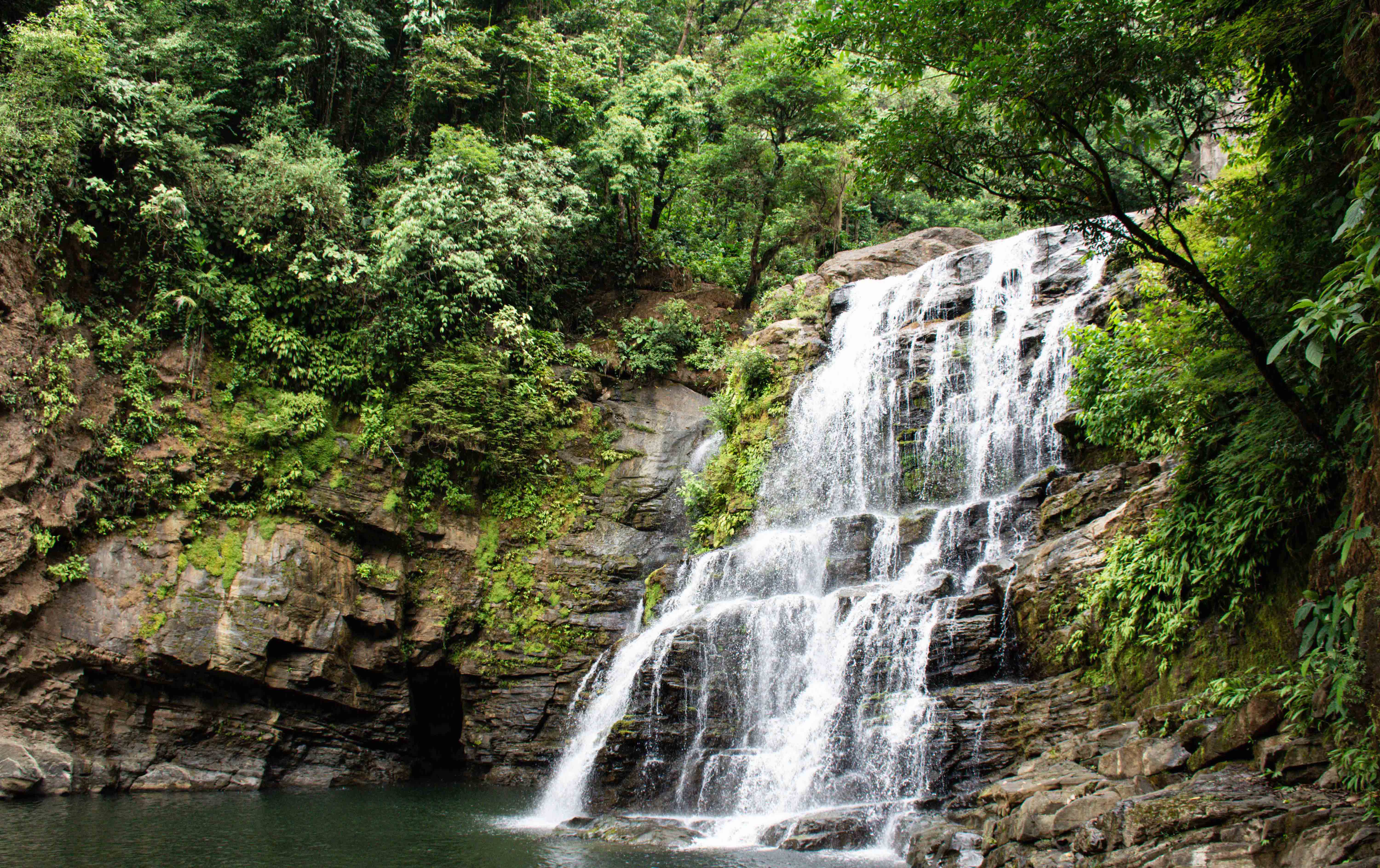
One of the best parts about living in or visiting Costa Rica is how easy it is to explore the country. Despite its small size, the landscapes change dramatically from one region to another, and in just a few hours you can go from dry tropical forests to cloud forests, from Caribbean canals to Pacific beaches, or from bustling cities to remote rainforests. While Guanacaste is home to incredible national parks of its own, some of the country’s most iconic destinations are found further afield. Traveling to them is not just about the parks themselves; it’s about the journey, the variety of experiences along the way, and the sense of discovery that comes with exploring Costa Rica. Here are three national parks outside of Guanacaste that are worth every bit of the adventure to get there.
- Manuel Antonio National Park (Central Pacific Coast)
Located near the town of Quepos, Manuel Antonio National Park is often described as Costa Rica’s crown jewel. Despite being one of the smallest national parks in the country, it is among the most biodiverse, home to over 100 species of mammals and nearly 200 bird species. Visitors are almost guaranteed to see white-faced capuchin monkeys swinging through the trees, sloths napping in the canopy, and iguanas sunning themselves along the trails. The park is also famous for its beaches, Playa Espadilla Sur and Playa Manuel Antonio, where soft white sand meets turquoise water, perfect for swimming after a hike through the forest.
Traveling from Guanacaste to Manuel Antonio takes about five to six hours by car along the scenic Pacific Coast highway. Many people make a stop in Jaco or Herradura to break up the drive, which adds a fun coastal road trip element to the experience. The park is open daily except Tuesdays, from 7:00 a.m. to 4:00 p.m., and the entrance fee is around $18 for non-residents. It is wise to buy tickets in advance online, as daily visitor numbers are capped to protect the environment. The best time to visit is in the morning when it is cooler, and wildlife is most active.
- Corcovado National Park (Osa Peninsula)
For travelers looking for an off-the-beaten-path experience, Corcovado National Park on the Osa Peninsula delivers a wilderness like no other. National Geographic once called it “the most biologically intense place on Earth,” and with good reason. The park protects vast stretches of lowland rainforest, mangroves, and untouched coastline. It is one of the few places in Costa Rica where you may spot all four species of monkeys, as well as tapirs, anteaters, scarlet macaws, and even jaguars if you are lucky.
Getting to Corcovado is part of the adventure. Most visitors travel via a short domestic flight to Puerto Jiménez or Drake Bay, followed by a boat ride or guided hike into the park. The remoteness is part of its appeal, it feels like stepping back in time to a truly wild Costa Rica. Unlike many other parks, visitors cannot simply walk in; entry requires a certified guide, which not only ensures safety but also enriches the experience with expert knowledge of the flora and fauna. Entrance fees are around $15 per day for non-residents, and guided tours can range depending on the length and level of adventure. To fully appreciate Corcovado, it is best to stay overnight in nearby eco-lodges or even camp inside the park with permits. The dry season, from December to April, is the most accessible time to visit, but adventurous travelers also enjoy the lushness of the rainy season.
- Tortuguero National Park (Caribbean Coast)
On the opposite side of the country, Tortuguero National Park offers a completely different experience. Known as the “Amazon of Costa Rica,” Tortuguero is a maze of canals, rivers, and lagoons surrounded by dense jungle. It is famous worldwide as a nesting ground for green sea turtles, which come ashore between July and October to lay their eggs. During this time, guided night tours offer the unforgettable opportunity to witness turtles nesting or baby hatchlings making their first trek to the ocean. Beyond turtles, Tortuguero is home to manatees, caimans, river otters, monkeys, and more than 300 species of birds.
The park is accessible only by boat or small plane, which adds to the sense of remoteness. Most travelers begin their journey in San José, drive about three hours to the town of La Pavona, and then take a scenic boat ride through winding canals to reach Tortuguero village. The park entrance fee is about $16, and guided canoe or boat tours are highly recommended to explore the waterways and spot wildlife. Tortuguero is open daily from 6:00 a.m. to 4:00 p.m., and while it can be visited year-round, the turtle nesting season is the highlight for many.
Exploring beyond Guanacaste is not only fun but also eye-opening. It reveals the incredible diversity of Costa Rica’s landscapes and wildlife and reinforces why this small country is recognized globally for its conservation efforts. Whether you are swimming at Manuel Antonio’s beaches, trekking through the wilds of Corcovado, or drifting through Tortuguero’s canals, each park offers a unique adventure that adds depth to the Costa Rican experience.